In autumn 2023 IFFE decided to organise online get-togethers and thematic chats every last Monday of the month from 19:00 – 20:30. These chats were advertised in the Pestalozzi Community of Practice and use Zoom as a platform. They have been opened to the wider interested public in 2025.

As from January 2026 they will be announced on this website and in our related social media channels (Substack, Twitter, Instagram, YouTube).
Next Chat, 2026
… forthcoming
Past Chats 2024 – 2025
What are the current hot topics and actions (February 2024)
Topics
- AI in the classroom
- Psychological problems of teachers and learners
- Students believe everything written in the internet (adults too)
- What is intelligence anyway?
- Critical thinking as a crucial skill
- Culture of discussion
- Coaching of students and teachers
- Violence
- Smartphone addiction – and no worry because the young people can manage it
- Computers are better humans… are they?
- The need to make intelligent choices requires knowledge from more than one source – Socratic dialogue with AI?
- Post pandemic psychological problems
- How to teach democracy in classrooms in the context of totalitarian regimes (or regimes becoming totalitarian)
- Teachers hosting their classrooms and school spaces
- Importance of the maintqainqnce of the freedom of teaching
- From disrespect to respect
Actions
- How manny PPP you keep contact with (between 1 and over 30 – average 3-4)
- Interbalkan network for intercultural education
- Producing a paper based on the recorded discussions and chats of our network
- A digital journal
- Organise a poll for future discussion topics
Recommendations
- The AI dilemma, Center for Humane Technology
- Ich bin dein Mensch, German movie
- Host leadership meeting
- Neil Postman, the subversive role of education, “crap detecting”
- SLEAD, teacher training programme for democratic thinking
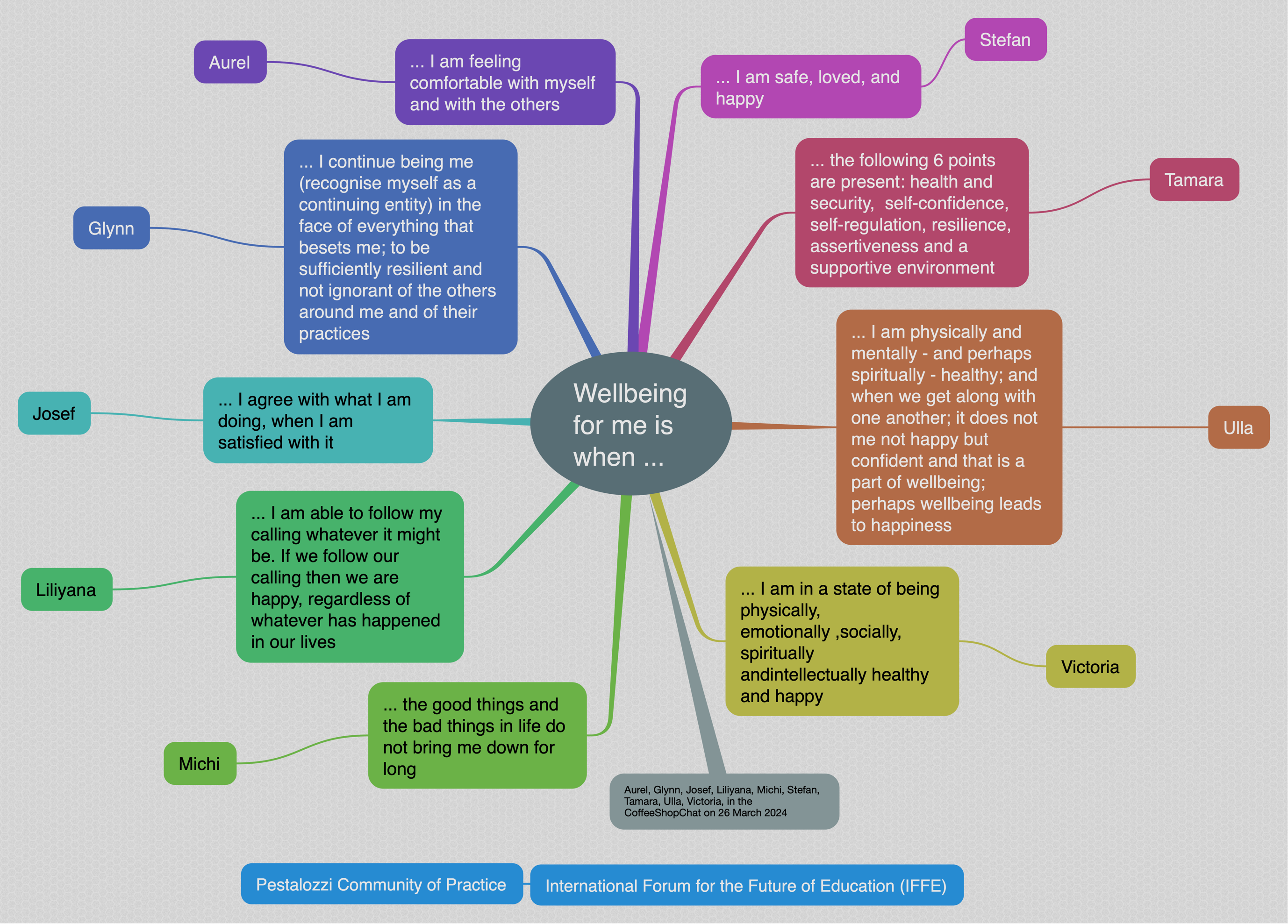
Wellbeing in Education (March 2024)
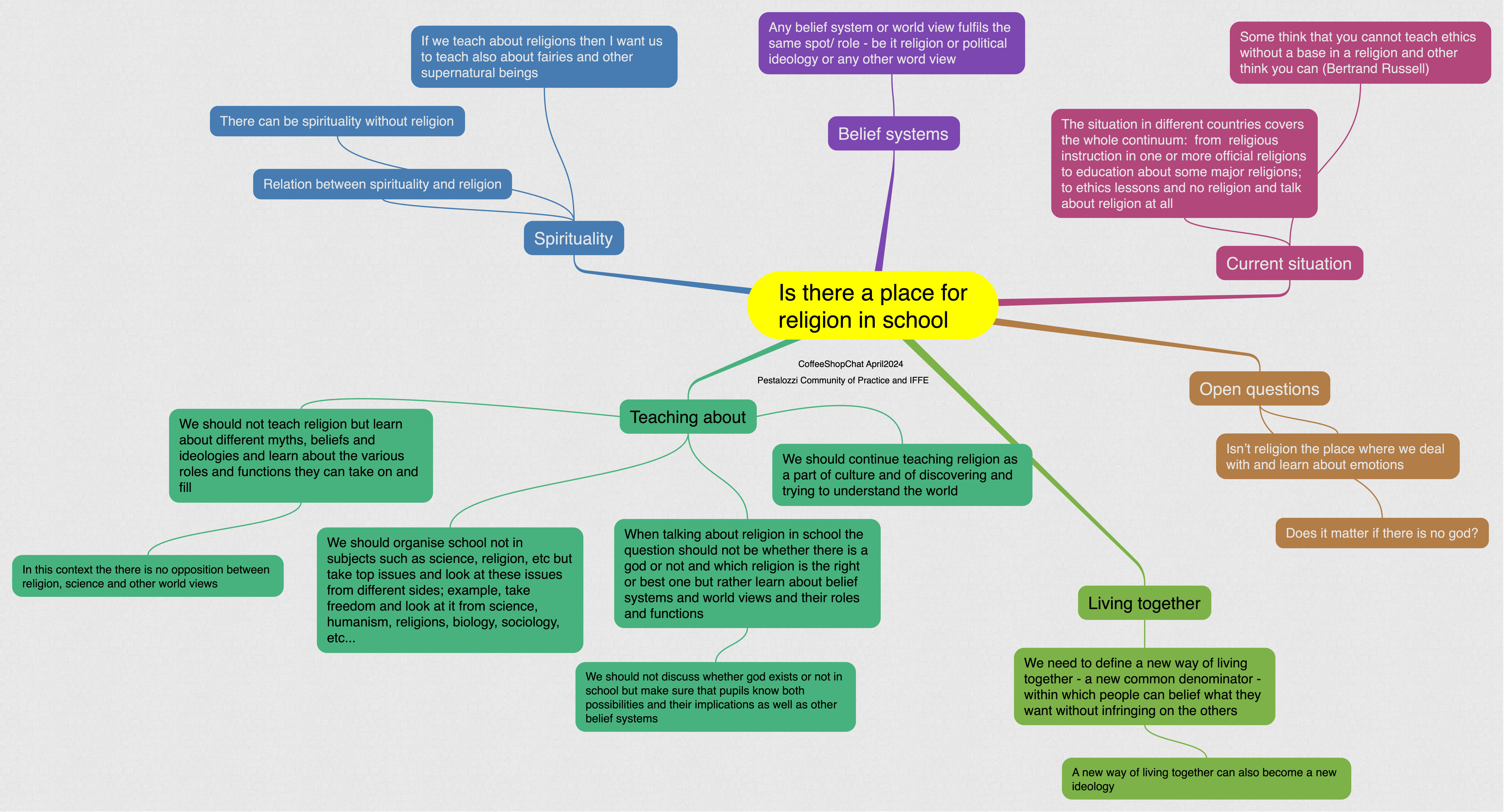
Is there a place for religion in schools? (April 2024)
Should the curriculum reflect the changing world (May 2024)
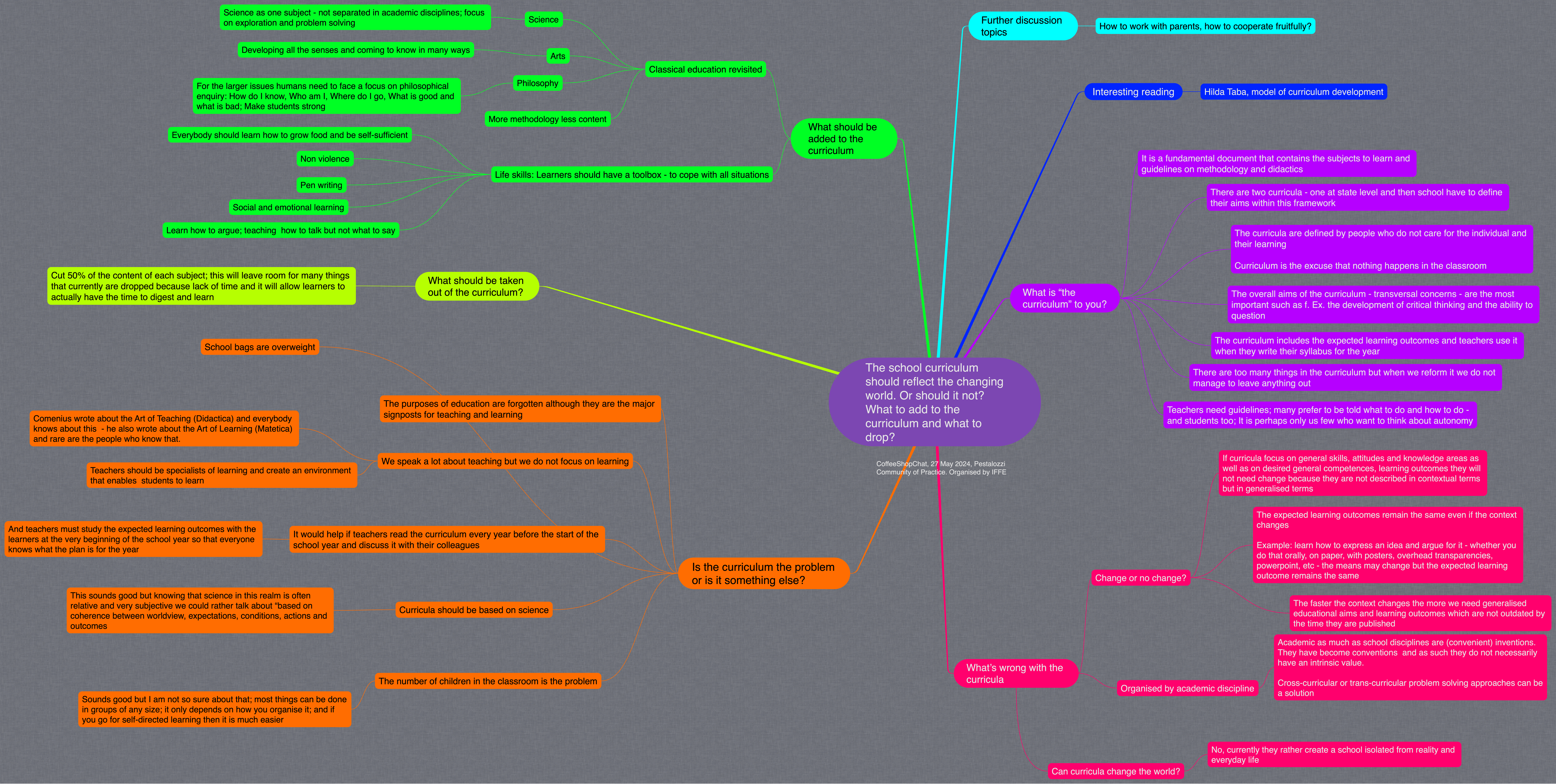
Working with parents (2024)
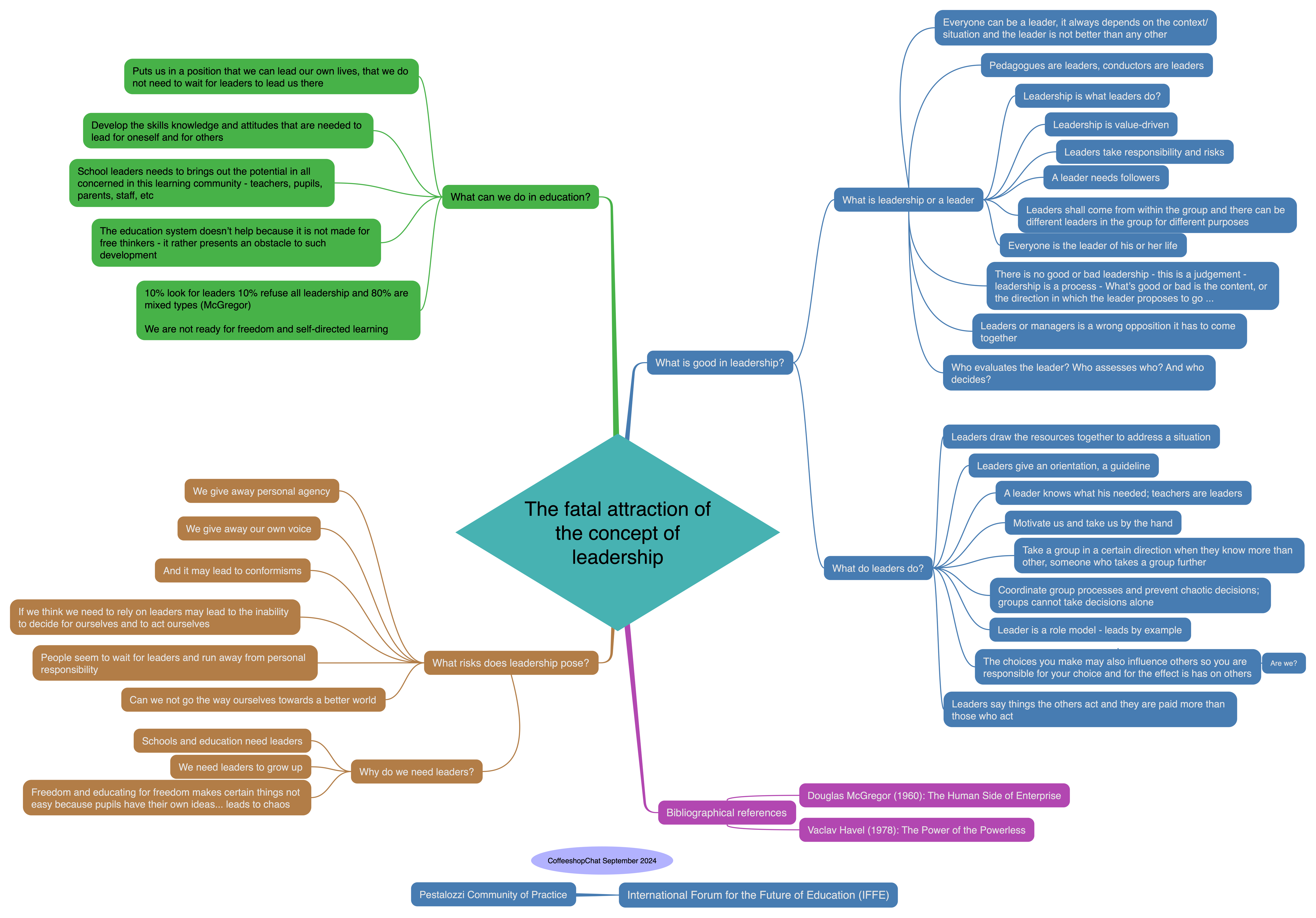
The fatal attraction of the concept of leadership (September 2024)
Everybody’s talking about leadership, how important, how good, how necessary. How to become a better leader? How to lead and not just manage? The infographics comparing leaders and managers abound, host leadership, leadership in education, practice leaders, and more…Do we really need that? Or is it just occupational therapy? What model of organisation do we adopt? What model of leadership? It keeps us occupied, it gives a good excuse to those who tend to manipulate others for their own gain, but does it help in creating a better world in the small social group and neighbourhood and in the big large world.
Are we not just preparing people to follow leaders? And to accept leadership talk?
So, do we need it or should we just get on with making the world a better place, every day, everywhere where we stand, in the classroom, the staff room, the cafe and the bar, the restaurant and the sports field, just do it, and do it together, without the bad excuse of waiting for the others to do before doing it oneself.
We will address different aspects notably: What is good in leadership? Which risks does it pose? And what shall we do in education about it?
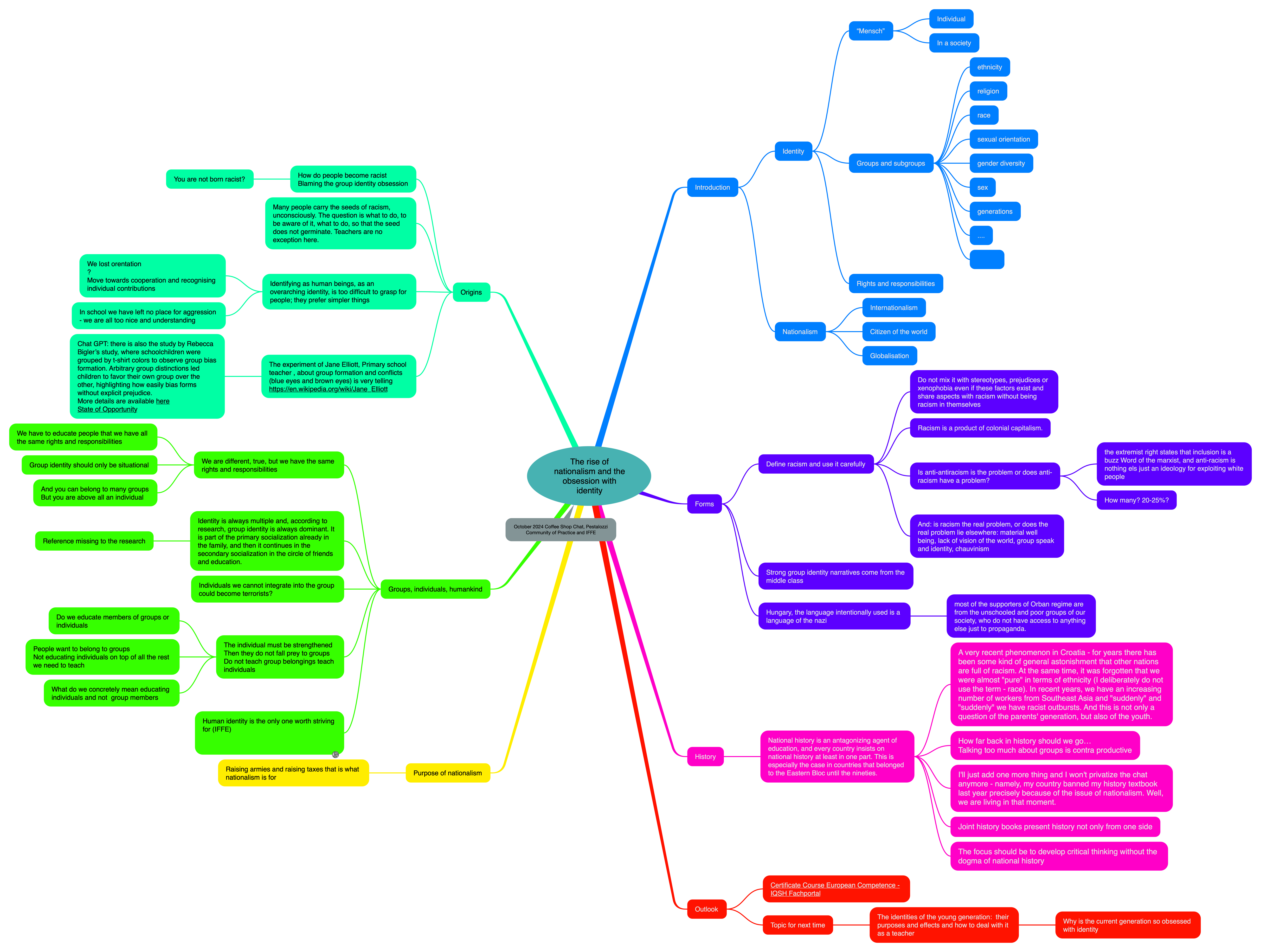
The rise of nationalism and the obsession with identity (October 2024)
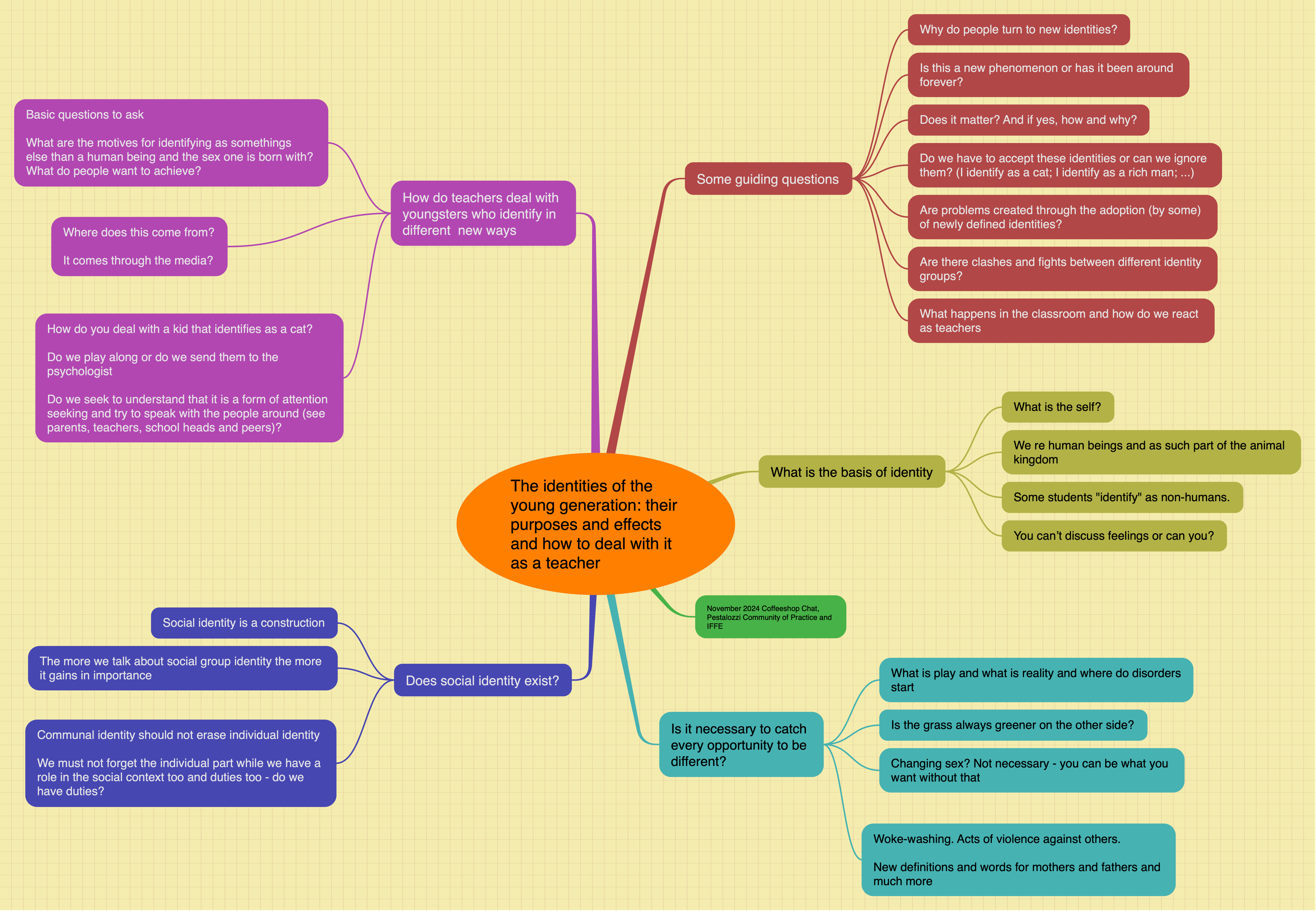
The identities of the young generation (November 2024)
The identities of the young generation: their purposes and effects and how to deal with it as a teacher
Some guiding questions:
Why do people turn to new identities?
Is this a new phenomenon or has it been around forever?
Does it matter? And if yes, how and why?
Do we have to accept these identities or can we ignore them? (I identify as a cat; I identify as a rich man; …)
Are problems created through the adoption (by some) of newly defined identities?
Are there clashes and fights between different identity groups?
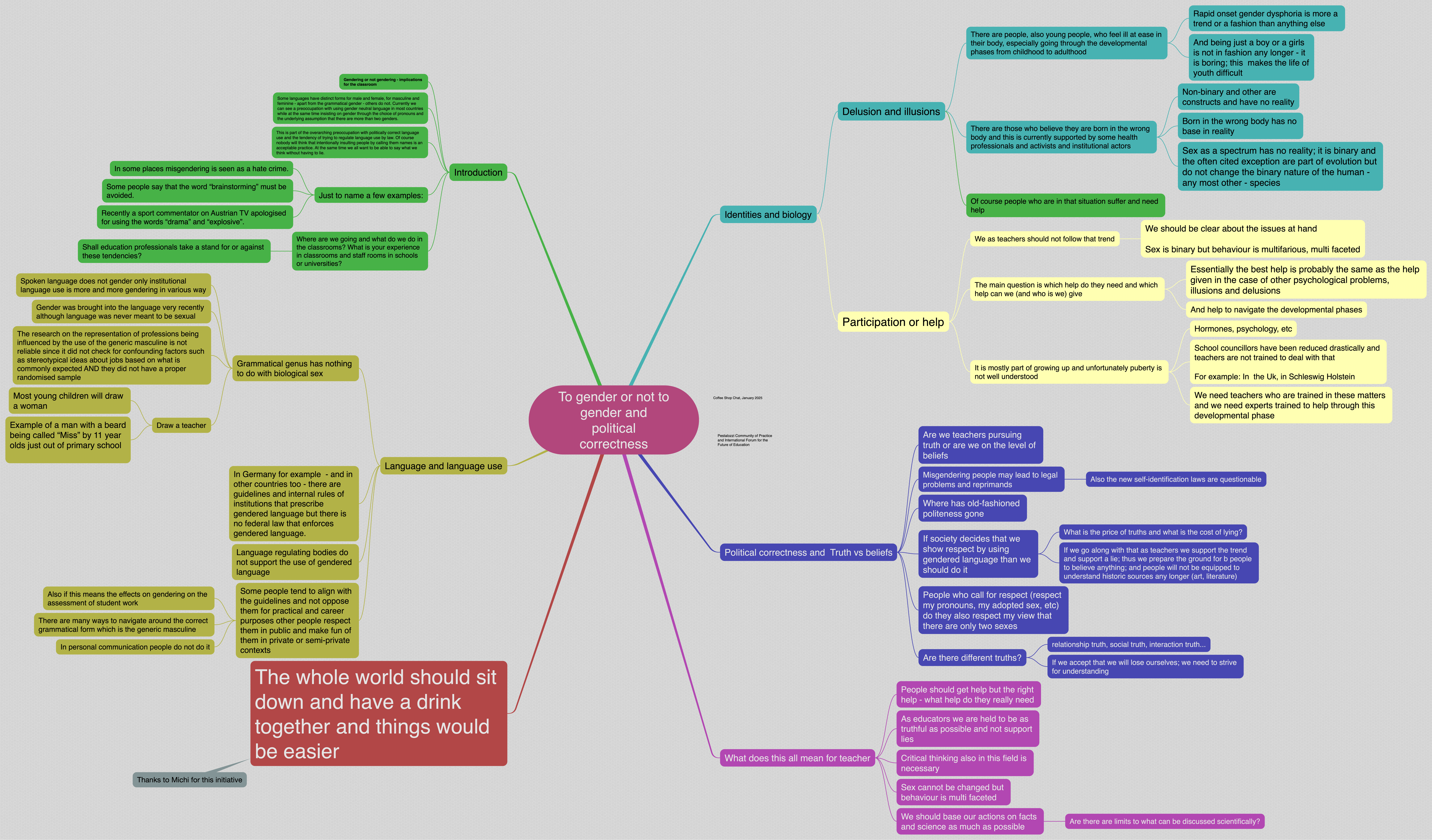
Gendering or not gendering – implications for the classroom (January 2025)
Some languages have distinct forms for male and female, for masculine and feminine – apart from the grammatical gender – others do not. Currently we can see a preoccupation with using gender neutral language in most countries while at the same time insisting on gender through the choice of pronouns and the underlying assumption that there are more than two genders.
This is part of the overarching preoccupation with politically correct language use and the tendency of trying to regulate language use by law. Of course nobody will think that intentionally insulting people by calling them names is an acceptable practice. At the same time we all want to be able to say what we think without having to lie.
Just to name a few examples:
- In some places misgendering is seen as a hate crime.
- Some people say that the word “brainstorming” must be avoided.
- Recently a sport commentator on Austrian TV apologised for using the words “drama” and “explosive”.
Where are we going and what do we do in the classrooms? What is your experience in classrooms and staff rooms in schools or universities?
Shall education professionals take a stand for or against these tendencies?
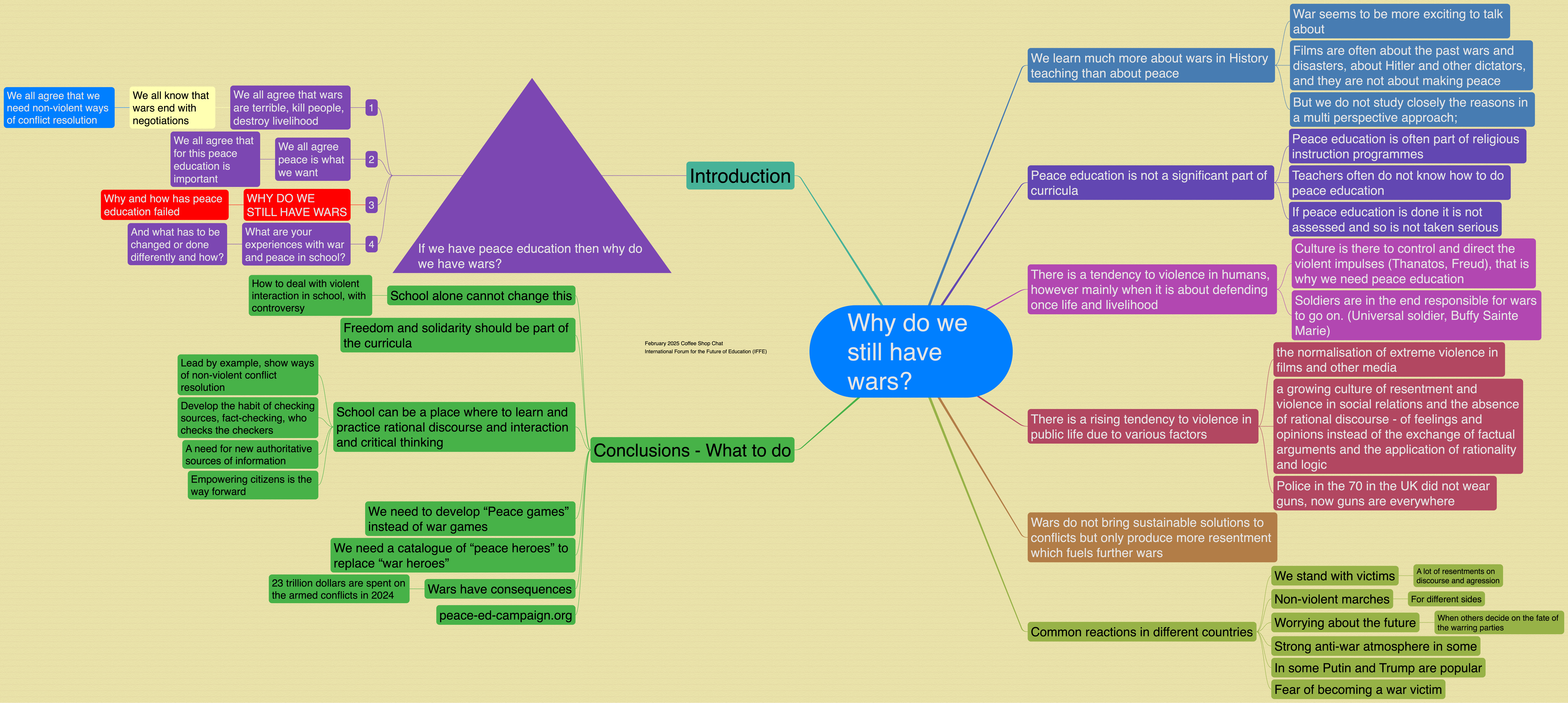
If we have peace education then why do we have wars? (February 2025)
Peace education has been around for a long time and there are anythings that have been said about it and still are said about it. Foremost that peace education is important. I agree.
What puzzles me is that despite all that we have wars all over the world and recently these wars are moving closer.
Thousands of people are injured and killed, thousands of people are displaced and they live in precarious and even worse conditions.
Town, industry and infrastructures is destroyed on a massive scale, yet we hear more talk about the righteousness and necessity of this killing and destruction than about the utmost necessity of solving conflicts in a non-violent way, of stopping the wars and starting negotiations.
Were has the peace movement gone? Where did peace education fail? What are your experiences with war and peace in school conversations? And what has to be changed or done differently and how?
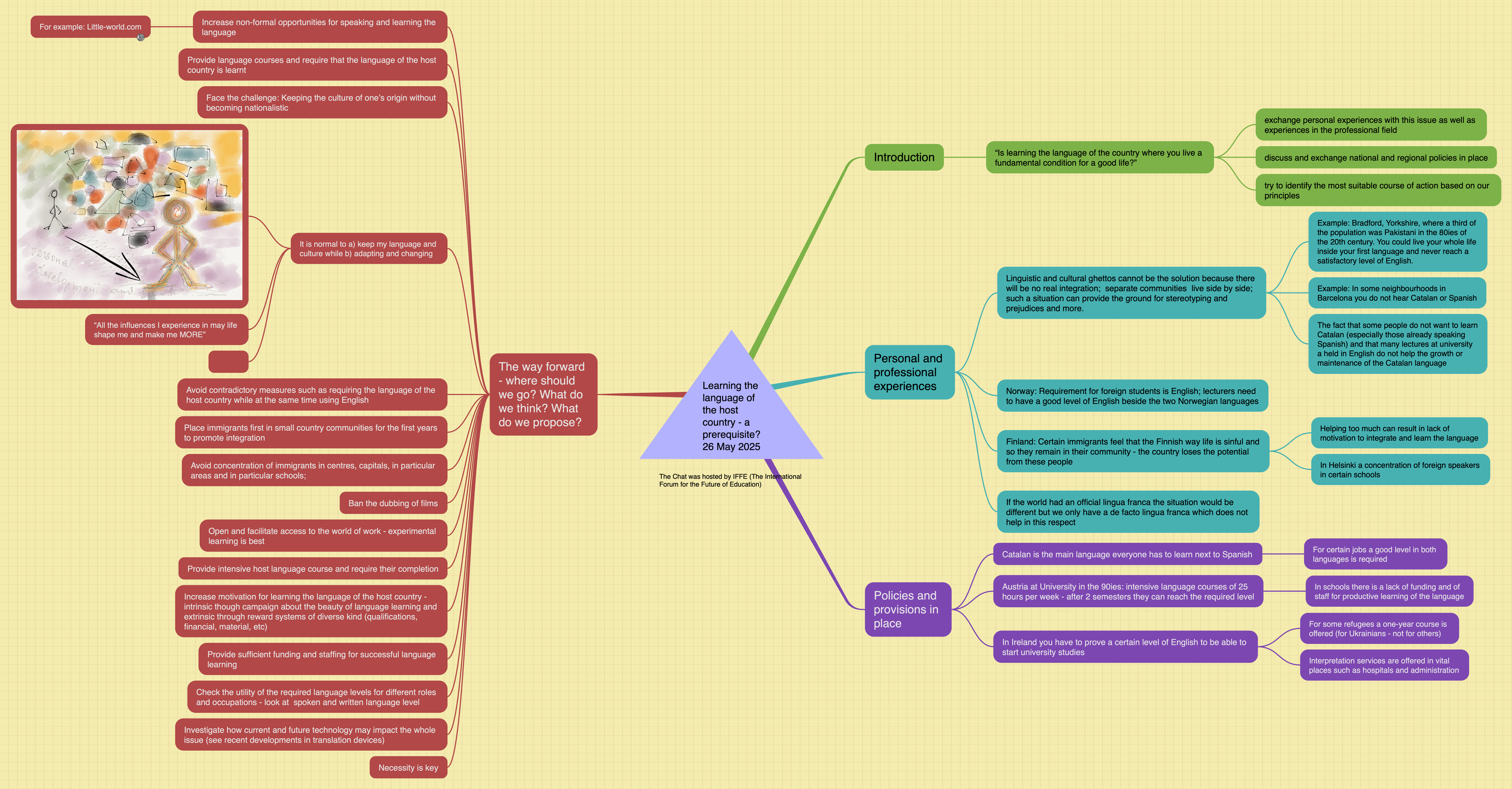
“Is learning the language of the country where you live a fundamental condition for a good life?” (May 2025)
We want to
- exchange personal experiences with this issue as well as experiences in the professional field
- discuss and exchange national and regional policies in place
- try to identify the most suitable course of action based on our principles
We invite the members of the Community of Practice of the Pestalozzi Programme who have contributed to the series of discussions over the past year as well as any other interested education professional across the wide field of formal, non-formal and informal education to join us on the last Monday of the month of May. Other people interested in educational issues are of course also welcome.
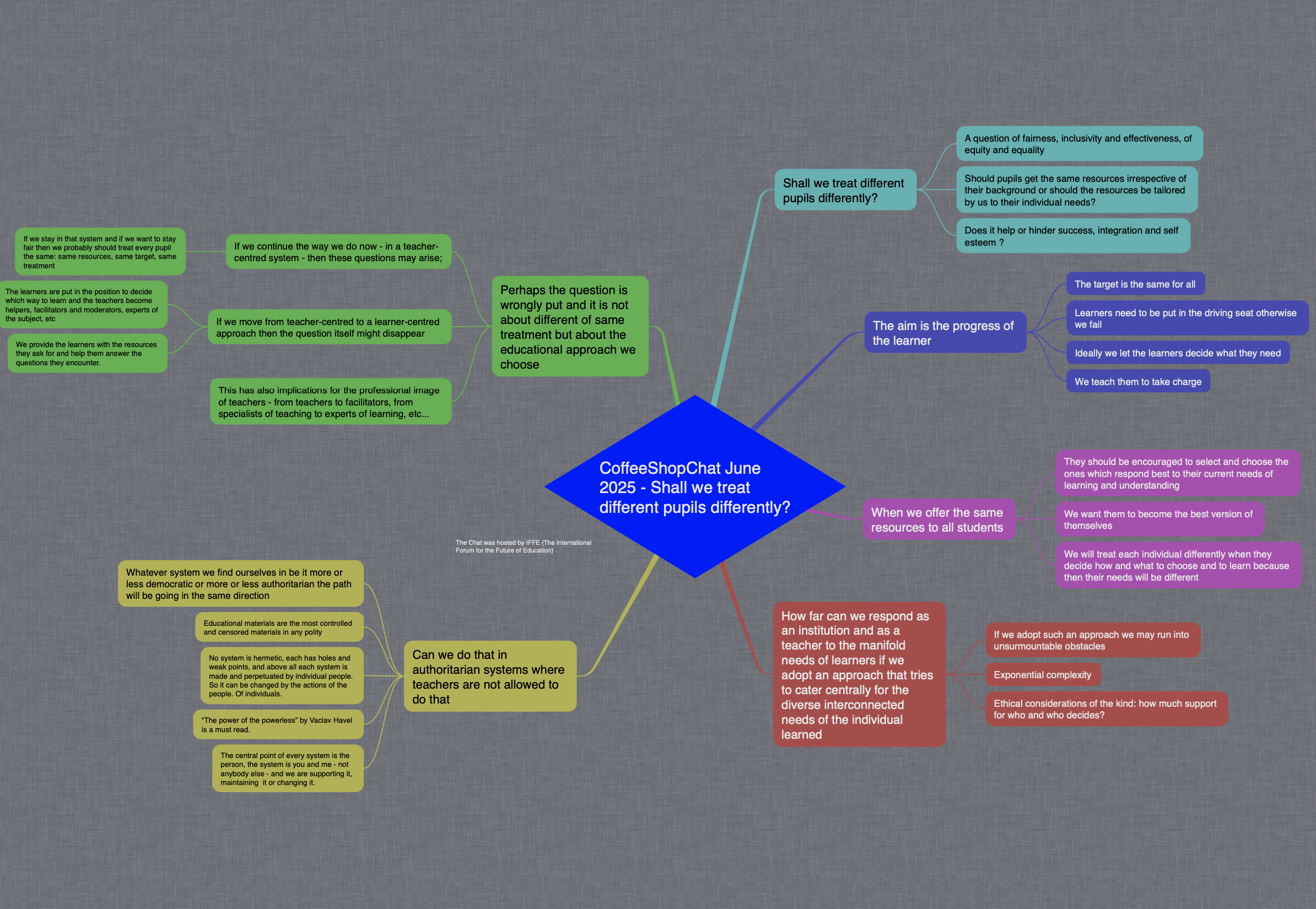
Shall we treat different pupils differently? (June 2025)
The question of whether different students/pupils/people should be treated differently touches on the heart of educational philosophy and practice. While equality suggests treating everyone the same, equity emphasizes adapting to individual needs to ensure fair outcomes. This debate invites us to explore how education systems can balance fairness, inclusivity, and effectiveness in addressing diverse (student/individuals) backgrounds, abilities, and aspirations.
Three major lines come to mind:
1. Equity vs. Equality in Education:
Should schools aim to provide the same resources to all students, or tailor support based on individual needs and circumstances?
2. Impact on Student Motivation and Performance:
Does differentiated treatment enhance or hinder student engagement, self-esteem, and academic success?
3. Social Integration and Fairness:
Can treating students differently create divisions or perceptions of favouritism, or does it foster a more inclusive and supportive learning environment?
 IFFE
IFFE 