…
We want education that changes people’s life for the better and avoids causing harm
MISSION
IFFE seeks to improve the thinking about and the practice of education through research, development, exploration, exchange and debate.
TASKS
IFFE engages with culture and education through local, regional, national and international exchange and research. It promotes responsible education and culture as well as the transmission
of cultural and educational knowledge and competences. In doing so, it seeks to enrich cultural life especially in the area of education and schooling. No, IFFE does not want to add more to school.
No, more-of-the-same is not better. Not even when it looks slightly different. We will not find the solution necessarily in new curricula or in a particular type of school instead of another type of school. IFFE is not advocating more (or less) modern technology, distance learning, competence-based learning, etc. neither.

AIM
IFFE is looking for the LEVERS which together with trust in people, in nature and in logic help us develop in a way which is better for all of us. The LEVERS which once activated change the course of history forever in the most beneficial way for mankind.
- Critical thinking and questioning
- Responsible and autonomous action
- Constructive and honest communication
- Living together as human beings with equal rights and responsibilities
- Sustainable production and value creation
- Learning with curiosity and motivation
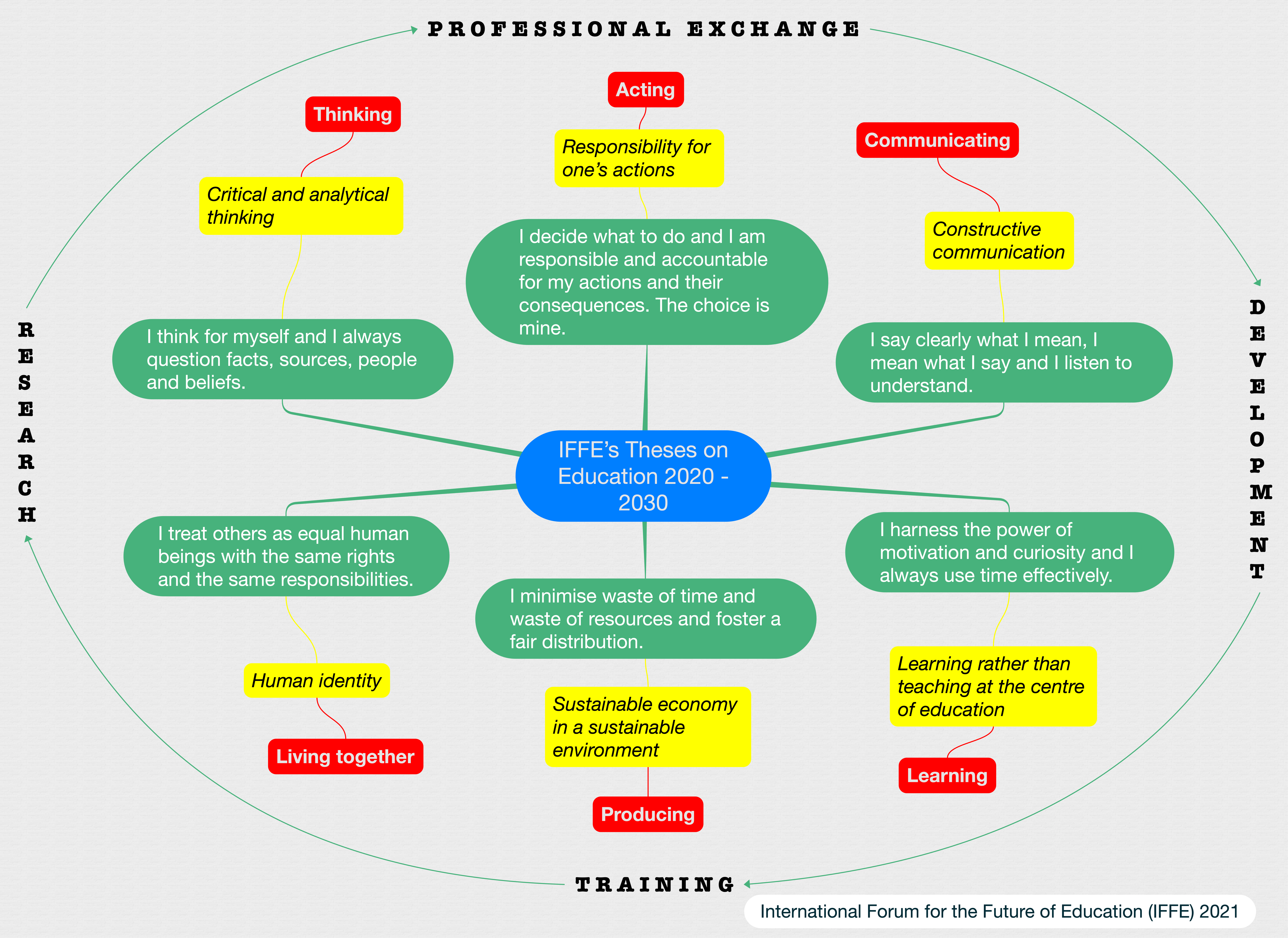
“Give me a place to stand, and a lever long enough, and I will move the world with one hand ”
Archimedes
ACTION
- IFFE produces online and offline publications and media content.
- IFFE organises conferences, lectures meetings, excursions, discussions, workshops and seminars; online and offline.
- IFFE develops and implements research projects, studies and surveys.
- IFFE cooperates in the implementation of events, projects and the development of publications and materials.
COMMUNICATION
IFFE believes in constructive communication based on the following rules (Josef Huber, 2006 in Intercultural competence for all, 2012, Council of Europe Publishing)
- Rule 1: Refrain from automatic interpretations, assumptions and judgements
- Rule 2: Step outside your frame of reference
- Rule 3: Be ready to explain the obvious
- Rule 4: Listen and ask questions
- Rule 5: Apply your skill of critical thinking
- Rule 6: Exchange and discuss value judgements
- Rule 7: Focus on solutions, not problems
 IFFE
IFFE 